

Pool replastering options range from a simple white plaster refresh to pebble, quartz, and polished finishes that change how the whole backyard looks. If the surface of your pool has turned rough, stained, or patchy, this guide walks through when replastering is the right call, how the main finish options compare, what the work involves, and the decisions worth making at the same time.
Quick comparison of pool replastering options
| Option | What to expect |
|---|---|
| Standard white plaster | Classic bright-blue water and the lowest upfront cost. The smoothest surface, but the most sensitive to water chemistry and the shortest typical service life. |
| Colored plaster | White plaster with pigment added for gray, blue, or dark tones. Same base material, so similar durability; darker colors can show mottling or fading more readily. |
| Quartz aggregate | Plaster blended with colored quartz. Harder and more stain-resistant than plain plaster, still fairly smooth underfoot, with subtle color variation. |
| Pebble aggregate | Small river pebbles exposed in the surface. Among the longest-lasting conventional finishes, with a natural look and more texture underfoot. |
| Polished or glass-bead finishes | Aggregate finishes that are polished smooth or mixed with glass beads for shimmer. Premium look and durability, at the highest cost. |
| Full tile interior | Every surface tiled. The most durable and most expensive option, chosen for design reasons rather than as a routine replaster. |
What replastering is, and when a pool needs it
Most in-ground pools in San Diego have a concrete shell (gunite or shotcrete) with a thin finish coat on the inside. That finish coat, usually plaster or an aggregate blend, is the waterproof, swimmable surface you touch. Replastering removes or prepares the worn finish and applies a new one. The shell itself stays.
Finishes wear out from the inside. Years of water chemistry, sun, and use slowly erode the surface, and the signs are usually easy to spot:
- Rough or sandpaper-like texture that scrapes feet and snags swimsuits.
- Stains and discoloration that no longer respond to brushing or chemical treatment.
- Etching, pitting, or crazing across the surface.
- Hollow or soft spots where the finish has separated from the shell.
- Exposed gunite, which shows as dark gray patches.
A pool that is only dull or lightly stained may be a candidate for an acid wash or professional cleaning. Once the finish is failing in several places, cleaning only buys a little time, and replastering becomes the sensible repair. A rough surface also makes the water harder to keep balanced, because it gives algae more places to hold.

The main replastering options, compared
Standard white plaster
The traditional finish is a white cement-and-marble-dust plaster troweled smooth. It gives the familiar bright, light-blue water and the lowest cost of the conventional options. The trade-off is durability: plain plaster is the softest finish and the most sensitive to water chemistry, so it tends to show etching, staining, and wear sooner than aggregate finishes. It remains a reasonable choice for a straightforward refresh on a tight budget, provided the water is kept balanced.
Colored plaster
Colored plaster is the same material with pigment added, producing gray, blue, or near-black water. It costs a little more than white and has similar durability. Darker colors hide some staining but can show mottling, which is natural shading in cement finishes, more readily than white. Viewing a large sample underwater before choosing is important; a chip in the hand does not predict the water color.
Quartz aggregate finishes
Quartz finishes blend plaster with colored quartz crystals. The quartz is harder than the cement around it, so the surface resists stains and etching better than plain plaster while staying fairly smooth underfoot. Color comes from the quartz blend as well as the pigment, which gives a subtle, speckled depth. For many homeowners this is the middle ground between cost and longevity.
Pebble aggregate finishes
Pebble finishes embed small, smooth river pebbles in the cement, then expose them by washing the surface before it fully cures. The result is a natural, textured look available in many colors, and it is among the longest-lasting conventional interiors because the exposed pebble takes the wear instead of the cement. The texture is more noticeable underfoot, especially with larger pebble sizes, so ask to walk on a sample if that matters to you.
Polished and glass-bead finishes
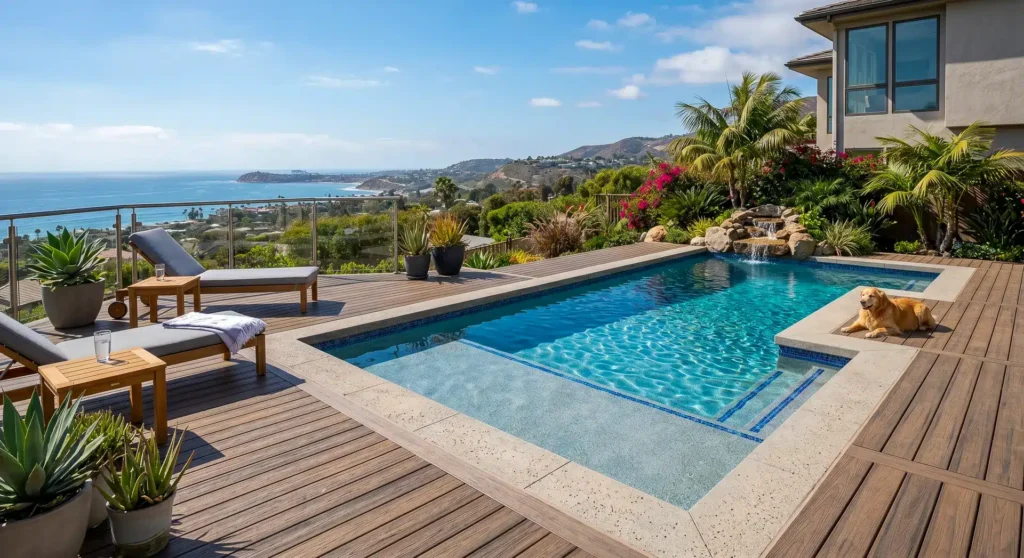
Premium variations polish an aggregate finish smooth, or mix in glass beads that catch the light. These give the durability of an aggregate finish with a smoother or more reflective surface and a wider range of colors. They sit at the top of the price range and are often chosen when the pool is the centerpiece of a larger backyard remodel.
Full tile
Tiling the entire interior is the most durable and most expensive option. It is less a replastering choice than a design decision, usually made for spas, small pools, or a specific look. For most pools, tile is used at the waterline and on steps or ledges, combined with one of the finishes above.
For more on choosing a finish color and matching it to waterline tile, see our guide to pool resurfacing finishes and tile.
What the replastering process involves
Knowing the steps helps you judge a proposal and plan around the time the pool is out of service.
- Draining. The pool is pumped down and the old finish inspected. In some soil conditions, groundwater can lift an empty shell, so draining should be handled by a professional who checks for that risk. Confirm any local rules on where pool water can be discharged.
- Inspection and repairs. With the pool empty, cracks, hollow spots, failing plumbing fittings, and light niches are checked. Structural cracks and leaks are repaired now, because a new finish will not fix them.
- Surface preparation. The old finish is chipped out, sandblasted or hydro-blasted, or cut back along the tile line, and a bond coat is applied so the new material adheres. Preparation quality determines whether the new finish lasts.
- Tile and coping. If waterline tile or coping is being replaced, it is done before the new finish goes on.
- Applying the finish. Crews apply the plaster or aggregate mix by hand in a single continuous session so there are no seams. Aggregate finishes are then exposed by washing or acid treatment.
- Refilling and startup. The pool is filled without stopping, then brushed daily and chemically balanced over the first few weeks while the finish cures. Following the startup instructions closely protects the new surface.
From draining to swimming, most projects take roughly one to two weeks, longer if tile, coping, or repairs are added. Late fall through early spring is a popular window in San Diego because the pool is used less and installers have more availability.
Decisions worth making at the same time
Replastering is the one time the pool is empty and the interior is being replaced, so several other upgrades cost less to do now than later.
- Waterline tile. Old tile is often dated, stained with calcium, or loose. Replacing it before the new finish keeps the two looking like one job.
- Coping and deck edge. If coping is cracked or the deck has settled, address it now so the finish line meets a clean edge. Our pool deck paver guide covers the surrounding surface.
- Steps, benches, and ledges. Adding a bench or widening steps is far simpler while the interior is stripped.
- Lighting and returns. Light niches and return fittings are easier to replace or reposition with the pool empty.
- Equipment. A new finish is a good moment to check that the pump, filter, and any salt system are set up to keep water balanced, since poor chemistry is the fastest way to shorten a finish’s life.
Choosing the right option for your pool
There is no single best finish. The right choice depends on how long you plan to stay in the home, how the pool is used, how hands-on you are with water care, and how the pool fits the rest of the yard.
- Short horizon, tight budget: white or colored plaster, kept balanced carefully.
- Long horizon, lower upkeep: quartz or pebble aggregate.
- Pool as the centerpiece of a remodel: a polished or glass-bead aggregate, chosen alongside new tile and coping.
- Young children, older swimmers, or bare feet all summer: favor smoother finishes such as plaster, quartz, or a polished aggregate over coarse pebble.
Ask any installer to show large samples underwater, explain how they will prepare the existing surface, and spell out the startup care in writing. Warranties differ between materials and between installers, so read the finish warranty and the workmanship warranty separately.
Our pool resurfacing and replastering service handles the inspection, repairs, finish, and startup as one project. When the plan grows into new features or a full backyard change, our pool remodeling team designs the pool, deck, and surrounding space together.
Frequently Asked Questions
How do I know my pool needs replastering rather than a cleaning?
Rough patches, exposed gunite, stains that no longer respond to chemical treatment, and spots that are soft or hollow when tapped point to a finish that has reached the end of its life. A pool that simply looks dull or has surface staining can often be improved with an acid wash or professional cleaning instead.
How long does a pool replaster take?
Most replastering projects run roughly one to two weeks from draining to refill, with the finish application itself taking a day or two. Tile or coping work, repairs found after draining, and weather can extend the schedule. Startup care continues for a few weeks after the pool is full.
Can I replaster the pool myself?
Applying pool plaster is skilled trade work. The material sets quickly, the surface has to be troweled evenly across curves and steps, and the base must be prepared correctly or the new finish can delaminate. Draining the pool also carries structural risk if groundwater is present. This is a job for an experienced crew.
Which replaster option lasts the longest?
Aggregate finishes such as quartz and pebble generally outlast standard white plaster, because the exposed aggregate is harder and less affected by water chemistry. In every case, preparation of the old surface, installation quality, and consistent water balance matter as much as the material itself.
Does replastering fix cracks or leaks?
A new finish covers surface crazing and shallow cosmetic cracks, but it does not repair a structural crack or a leaking shell, skimmer, or fitting. Those need to be diagnosed and repaired before the new plaster goes on, which is one reason the pool is inspected once it is drained.
Is replastering a good time to change the pool’s color or add features?
Yes. Because the pool is already drained and the interior is being replaced, it is the most efficient point to choose a new finish color, replace waterline tile, update coping, or add features such as a tanning ledge or steps.
Replaster Once, and Do It Right
Pool replastering options come down to a balance of cost, durability, feel, and appearance. Plain plaster is the most affordable, aggregate finishes last longer with less fuss, and premium finishes make the pool a design feature. Whatever you choose, the preparation of the old surface and the care of the new one in its first weeks matter as much as the material.
Ready to look at samples for your pool? Book a free consultation, or see recent pool projects on Instagram.